What I Wish I'd Known Before I Trained as a Yin Yoga Teacher
The fears, the surprises, and what I discovered on the other side
I almost talked myself out of it three times.
The first time, I decided I wasn't experienced enough. The second time, I convinced myself the timing was wrong. The third time, I ran out of excuses and said yes and I am so grateful that I did.
Teacher training changed the way I practice, the way I understand my body, and — I don't say this lightly — the way I move through the world. But there are things I wish someone had told me beforehand. Here's what I know now.
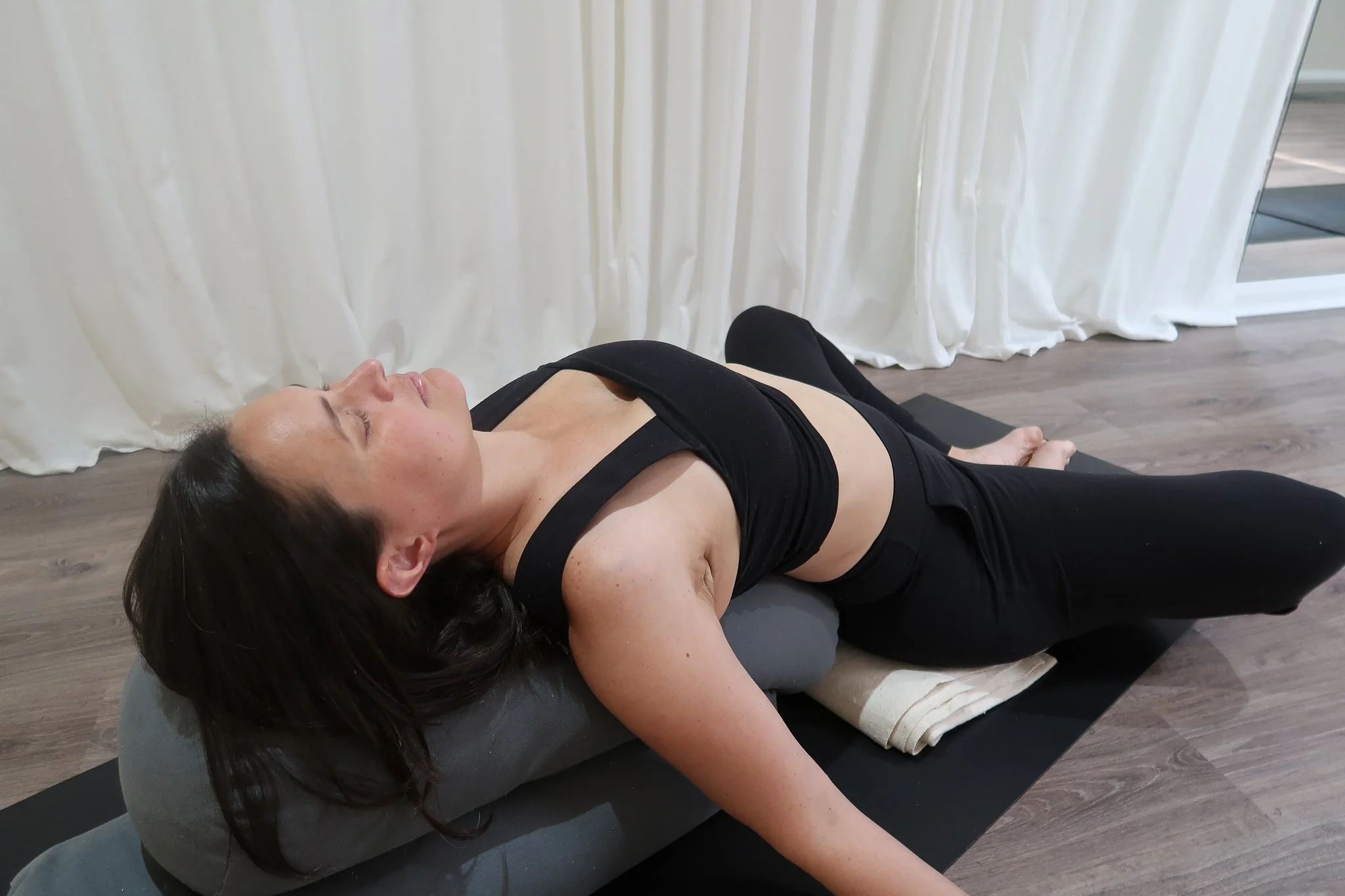
You Don't Need to Feel Ready
This is perhaps the most important thing I can tell you. The people who feel completely ready to start a teacher training are rare. Most of us start with a mixture of excitement and quiet terror, wondering if we're going to be found out as someone who doesn't actually know enough.
You are not meant to start a training already knowing everything. That's why it's a training.
When I look at the students who come through the 50hr Yin Yoga Teacher Training I run, the ones who transform the most aren't the ones who came with the most experience. They're the ones who came with the most curiosity.
It Will Change Your Personal Practice First
Before it changes how you teach, a yin teacher training changes how you practice. You start to understand why certain poses feel the way they do. You begin to recognise the meridian lines in your own body. You develop a relationship with sensation that is more nuanced, more informed, and more trusting.
This deepening of your personal practice happens regardless of whether you ever stand in front of a class. Many of my students train because they want to understand their practice at a deeper level — not because they immediately want to teach. Both are completely valid reasons to be there.
The Philosophy Will Change You Off the Mat
I did not expect this. I thought I was signing up to learn anatomy and sequencing. And I did — but I also walked away with a new relationship to effort, to rest, to resistance, and to the question of what I'm actually doing when I'm "doing yoga."
The Taoist roots of yin yoga, Wu Wei, the principle of yielding to rather than forcing against, have a habit of showing up in the rest of your life. In the way you navigate difficult conversations. In how you respond to things not going to plan. In your willingness to slow down when everything in you wants to speed up.
"I came for the anatomy. I stayed for the philosophy. I left with a completely different relationship to rest."
You Will Probably Cry at Least Once
Not because it's sad, but because yin has a way of releasing things. It's well-documented that the hips and the psoas complex hold chronic tension that is connected to emotional states. When you begin to work with these areas consistently and with more understanding, things move physically and otherwise.
This is not a problem. This is, in many ways, the practice working. Learning to hold space for this — in yourself and eventually in students — is one of the most valuable skills a yin teacher develops.
The Online Format Is a Feature, Not a Compromise
When I designed the 50hr training as an online, self-paced programme, some people were initially uncertain. Wouldn't it be better in person? Wouldn't it be less rigorous?
Here's what I've observed: the people who do the training at home, in their own space, around their actual lives, often go deeper than they expected to. They practice in their own bodies. They reflect in their own time. They don't have the performance pressure of a group setting.
They also actually finish it — because it's designed to fit the life they have, not the life they wish they had.
The Things I Most Wish I'd Known
~ Your "weakest" area will become your greatest asset as a teacher because you'll understand the student who struggles with it.
~ The anatomy is not as scary as it sounds. The body makes sense once someone explains it well.
~ You don't have to have your life figured out to teach stillness. You just have to be willing to practice it.
~ The relationship between teacher and student starts the moment you begin training. How you are treated informs how you will treat others.
~ You will want to tell everyone about yin yoga. This is a normal side effect. 😂 We accept it.
If any of this resonates, I'd love for you to have a look at the 50hr Online Yin Yoga Teacher Training. It's the course I wish had existed when I started: thorough, supportive, and built around real life.